
Saturday, October 13, 2012

Friday, October 12, 2012
Wednesday, May 11, 2011
"We don’t simply own products; we have relationships with them. Intimate ones at that. We are in a state of courtship with every brand in existence. Each of them wants to be a part of our lives, and each wants love in return."
-Thomas Giannattasio for Smashing Magazine
Yes, we all know that when we love our belongings, we truly love our belongings. A lot can be said on the subject on how this came to be true, who is responsible, and whether or not it is a good thing, but the fact remains that it is true. I'm interested in knowing how far consumer culture is going to take this; at the fringes of society there is already evidence of devoted relationships between humans and their belongings.
One such example is that of the 2D relationship, a recent Japanese phenomenon where Otaku and other socially clumsy individuals devote their emotions to anime and manga characters. Toru Honda, an author promoting the movement, encourages these men and women to rebel against the "romantic capitalism" of current japanese society, where love is more attainable by money and fame than by honesty and integrity. Honda continues to claim that “As long as you train your imagination, a 2-D relationship is much more passionate than a 3-D one”. In addition to these Otaku, there are other stories of humans in love with inanimate objects. One woman, Erika La Tour Eifel, has had relationships with an archery bow, a japanese sword, a banister, and finally, the Eifel Tower, who's name she took as her own when she married it. She is part of a group of people who call themselves Objectum-Sexuals, and who are devoted to their intimate relationships with objects. While these examples are all individuals who currently occupy the social spaces and practices on one side of the edge of acceptable behavior in society, it has been said that it is the very fringes of society that define the norm: if the influence of the opposing extreme (that of exclusively interpersonal relationships) is shrinking, then we will see a change in the norm, skewing toward the side of increasing acceptance of relationships with inanimate objects.
It becomes apparent that our relationships with objects are important, and perhaps changing to become more acceptable to show love for our belongings. The power of the information age, especially with younger generations who spend increasingly large amounts of time interacting through digital media, opens up the question of love mediated through objects, in addition to our love for objects. How far will this love go, and to what extent will these relationships replace traditional human relationships? I think the human need for physical contact and reciprocity will limit the strength and frequency of inanimate relationships, but the human mind is in constant evolution...
source (2-D Love)
source (Objectum Sexuality)
Monday, September 13, 2010
s/s 2011 things i like.


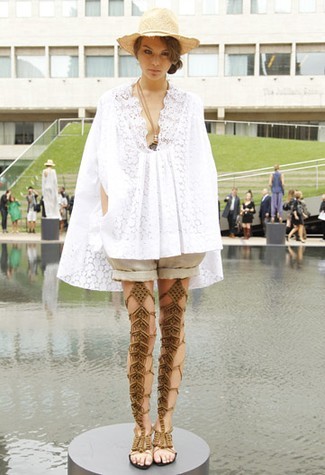


Lots of people showing in NY (and none in paris or milan, that I saw) did jumpsuits (and to a lesser degree, overalls)! I was anticipating some (but not this many), ever since seeing the jumpsuit in the APC A/W 2010 lookbook.


Thursday, August 26, 2010
click the images!
I've recently become re-obsessed with the work of Harry Clarke, after watching the documentary Darkness in Light. While his stained glass work is wonderful (especially his last works, like his notorious window for the League of Nations in Geneva), I'm much more a fan of his book illustrations. A combination of his macabre and grotesque medieval sensibility with the Viennese art nouveau style that was gaining in popularity at the time, his illustrations are both disturbing and beautiful. Here are some of my favorites, most of which are from his illustration of Edgar Allen Poe stories (you'll have to click the images because blogspot is kinda of a bitch with big images, and making them a small size would do them no justice):


.png)
Wednesday, August 25, 2010
"It is worth noting that the highest proportion of graffiti attacks (an extreme form of unofficial visual language) take place in schools, the institutions responsible for the maintenance of the official language and on local authority (state) property"
-David Crow Visible Signs
Funny how graffiti, a deviation from the "official language" (ie that used in university systems, or government offices, for example), was once completely dismissed as a form of valuable art. Now, pieces of graffitied walls are torn off and sold, or boarded over in plexiglass to preserve specific works. I'm wondering what this means for the value of "official" language; it seems like while the dichotomy between "official" and "unofficial" language systems (both linguistic and visual) is still present, that capital is now being awarded to individuals who have a high level of skill in nonofficial language systems (rappers, graffiti artists), while previously, capital was awarded more so based on an individual's command of the official language systems (represented through an award, like a diploma). Will we ever see a merge of nonofficial language systems with the official as the internet generation reaches adulthood and begins holding positions of power? I for one would like to see a future presidential debate in which candidates talk like lolcats while their responses are projected in text on the tv screen... "moar taxes? ur a fukin fag!!! welfare for all ya'll bitches ftw!"
Saturday, July 24, 2010


Friday, July 23, 2010
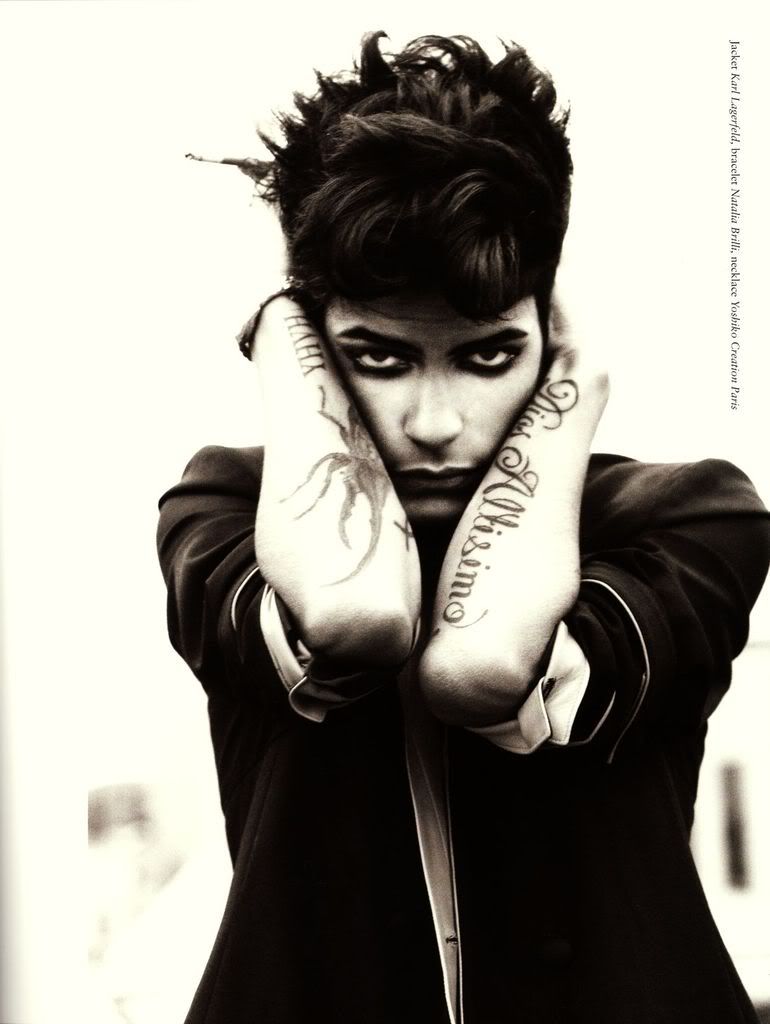
What does photography mean today?
“The photograph is an extended, loaded evidence - as if caricatured not the figure of what it represents (quite the converse) but its very existence. The image, says phenomenology, is an object-as-nothing. Now, in the photography, what I posit is not only the absence of the object; it it also, by one and the same movement on equal terms, the fact that this object has indeed existed and that it has been there where I see it. Here is where the madness is, for until this day no representation could assure me of the past of a thing expect by intermediaries; but with the photography, my certainty is immediate: no one in the world can undeceive me. The photography becomes a bizarre medium, a new form of hallucination: false on the level of perception, true on the level of time: a temporal hallucination, so to speak … a mad image, chafed by reality.”
Roland Barthes - Camera Lucida
I read this passage, and immediately thought that while entirely accurate in its day - and still holds true for most people - these claims on photography are true in a different way. The arrival of photoshop (and CS5 particularly, with its content-aware fill feature) has irrevocably changed the authenticity of photographs and my belief in their honesty. Any look through a magazine and its advertisements are a clear indication of the multiple realities allowed by modern technology: the face on a magazine cover is represented not how it appeared then and there as the photograph was taken, but has been adjusted to appeal to and reinforce a set system of aesthetics. Not only that, but it is ever the more possible to take images from various sources, and combine them together in a new image/event (I think of the band pictures featured on the cover of modern music magazines, with each member being photographed separately and then grouped together in post production). Each individual image is still locked into the past as Barthes states, but their combination makes of them a new image - a patchwork of past true occurances to make a falsified event that exists only in the present, as it is viewed.
Sunday, July 18, 2010


Subscribe to:
Posts (Atom)